GRINHALS®
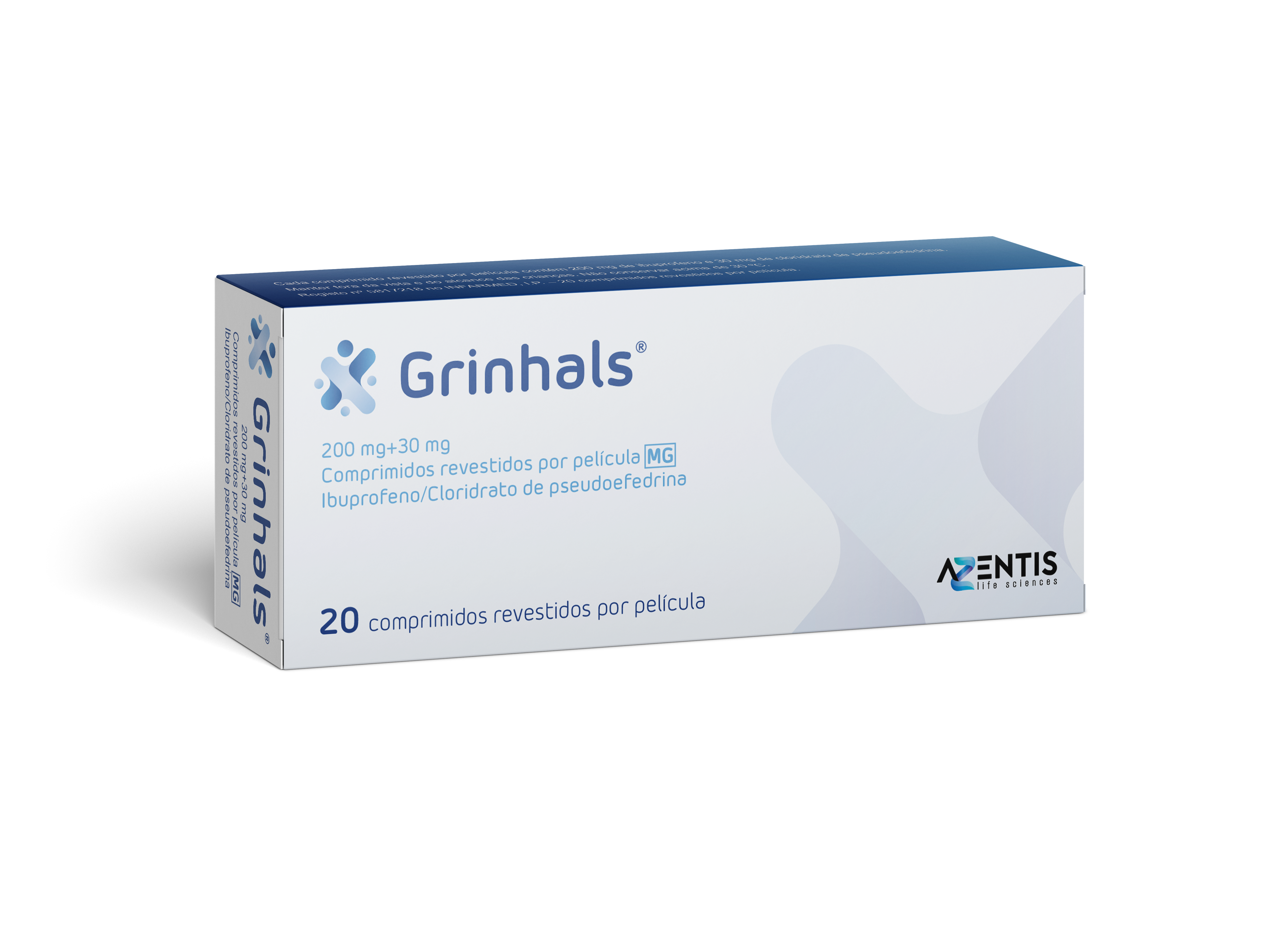
FEach Grinhals® film-coated tablet contains 200 mg of ibuprofen and 30 mg of pseudoephedrine hydrochloride.
Pack size: 20 film-coated tablets.


This website is intended exclusively for residents of Portugal.
Date of Summary of Product Characteristics (SmPC) approval: 21 June 2023.
Last revision: 24 November 2023.
GRINHALS®
Grinhals® is indicated for the symptomatic treatment of nasal congestion associated with the common cold accompanied by pain and/or fever in adults and adolescents aged 15 years and over.

This website is intended exclusively for residents of Portugal.
Date of Summary of Product Characteristics (SmPC) approval: 21 June 2023.
Last revision: 24 November 2023.
GRINHALS®
Always take this medicine exactly as described in this leaflet or as your doctor or pharmacist has told you. Talk to your doctor or pharmacist if you are unsure.
The recommended dose for adults and adolescents aged 15 years and over is 1 tablet every 6 hours, if necessary. For more severe symptoms, take 2 tablets every 6 hours[AA2.1], if necessary.
Do not exceed the maximum daily dose of 6 tablets.

This website is intended exclusively for residents of Portugal.
Date of Summary of Product Characteristics (SmPC) approval: 21 June 2023.
Last revision: 24 November 2023.
GRINHALS®
Do not take Grinhals®:
- if you are allergic to ibuprofen, pseudoephedrine hydrochloride or any of the other ingredients of this medicine;
- if you are under 15 years of age;
- if you are in the third trimester of pregnancy (7 months or more);
- if you have ever had an allergic reaction or experienced shortness of breath, asthma, skin rash, itching, runny nose or swelling of the face after taking acetylsalicylic acid (aspirin) or other NSAIDs (non-steroidal anti-inflammatory drugs);
- if you have active or recurrent stomach or duodenal ulcers (peptic ulcers), or a history of such ulcers or bleeding (at least two distinct episodes of confirmed ulceration or bleeding)
- if you have a history of gastrointestinal bleeding or perforation related to previous treatment with NSAIDs;
- if you have severe liver or kidney impairment;
- if you have severe heart failure (serious heart problems);
- if you have severe heart or circulatory problems (such as heart disease, high blood pressure, angina, rapid heartbeat), an overactive thyroid gland, diabetes or pheochromocytoma (a tumour of the adrenal gland);
- if you have a history of heart attack (myocardial infarction);
- if you have had a stroke or have been told that you are at risk of having a stroke.
- if you have a history of seizures (fits);
- if you have unexplained disorders affecting the formation of blood cells;
- if you have increased pressure in the eye (angle-closure glaucoma);
- if you have difficulty urinating due to prostate problems;
- if you have been diagnosed with Systemic Lupus Erythematosus (SLE), a disease affecting the immune system that causes joint pain, skin changes and other problems.

This website is intended exclusively for residents of Portugal.
Date of Summary of Product Characteristics (SmPC) approval: 21 June 2023.
Last revision: 24 November 2023.

GRINHALS®
Talk to your doctor or pharmacist before taking Grinhals®:
- if you have asthma, as this medicine may trigger an asthma attack;
- if you have a history of gastrointestinal disorders (such as hiatus hernia, gastrointestinal bleeding, peptic or duodenal ulcer);
- if you have or have had gastrointestinal disease (ulcerative colitis or Crohn’s disease);
- if you have high blood pressure, diabetes, high cholesterol, a family history of heart disease or stroke, or if you smoke;
- if you have kidney or liver problems;
- if you have diabetes because of the potential risk of diabetic nephropathy;
- if you have an overactive thyroid gland (hyperthyroidism) or psychosis;
- if you have blood clotting disorders;
- if you have heart problems, including heart failure, angina (chest pain), or if you have had a heart attack, coronary artery bypass surgery, peripheral arterial disease (poor circulation in the legs or feet due to narrowing or blockage of the arteries), or any type of stroke (including a “mini-stroke” or transient ischaemic attack [TIA]).

This website is intended exclusively for residents of Portugal.
Date of Summary of Product Characteristics (SmPC) approval: 21 June 2023.
Last revision: 24 November 2023.

GRINHALS®
Tell your doctor or pharmacist if you are taking, have recently taken or might take any other medicines.
Grinhals® may affect or be affected by other medicines. For example:
- anticoagulants (medicines that thin the blood or prevent blood clotting, e.g. acetylsalicylic acid, warfarin and ticlopidine);
medicines used to treat high blood pressure (ACE inhibitors such as captopril, beta-blockers such as atenolol, and angiotensin II receptor antagonists such as losartan).
Some other medicines may also affect or be affected by treatment with Grinhals®. Therefore, you should always consult your doctor before using Grinhals® together with other medicines.
Grinhals® must not be used in combination with:
- other vasoconstrictor medicines used as nasal decongestants, whether administered orally or nasally (e.g. phenylpropanolamine, phenylephrine and ephedrine);
- a medicine used to treat attention deficit hyperactivity disorder (ADHD), called methylphenidate;
- medicines used to treat depression, such as non-selective monoamine oxidase inhibitors (MAOIs, e.g. iproniazid).
Do not take this medicine if you are taking these medicines or if you have taken them within the last 14 days[AA3.1].
In particular, tell your doctor or pharmacist if you are taking:
- other NSAIDs, including high doses of acetylsalicylic acid (aspirin), and selective COX-2 inhibitors;
- medicines used to treat heart rhythm disorders (cardiac glycosides, e.g. digoxin);
- medicines used to treat epilepsy (e.g. phenytoin);
- glucocorticoids, which are used to treat many conditions such as pain, swelling, allergies, asthma, rheumatic diseases and skin disorders;
- injectable heparins;
- certain medicines used to treat depression (e.g. lithium, selective serotonin reuptake inhibitors (SSRIs), and monoamine oxidase A inhibitors (MAO-A inhibitors));
- medicines used for temporary suppression of the immune system, such as methotrexate (used to treat arthritis, psoriasis and certain cancers), ciclosporin or tacrolimus (used following transplantation);
- medicines used to treat diabetes (sulfonylureas);
- medicines used to treat infections (e.g. quinolone antibiotics and trimethoprim);
- medicines that increase urine production (e.g. potassium-sparing diuretics);
- medicines used to treat gout (e.g. probenecid and sulfinpyrazone);
- any medicines used to treat migraine (including medicines containing ergotamine or ergot derivatives);
- medicines used to treat HIV/AIDS (zidovudine);
- preparations containing Ginkgo biloba.

Pseudoephedrine administered close to the time of surgery may cause a sudden increase in blood pressure. Stop taking Grinhals® several days before surgery and inform your anaesthetist.
You should avoid drinking alcohol while taking this medicine.
(Pregnancy and breast-feeding)
If you are pregnant or breast-feeding, think you may be pregnant or are planning to have a baby, ask your doctor or pharmacist for advice before taking this medicine.
Do not take Grinhals® during the third trimester of pregnancy.
Do not take this medicine if you are breast-feeding, as it may harm your baby.
Ibuprofen belongs to a group of medicines (NSAIDs) that may impair female fertility. This effect is reversible upon discontinuation of the medicine.
(Driving and using machines)
Grinhals® may cause dizziness, hallucinations, uncommon headache, and visual or hearing disturbances. These effects may temporarily impair your ability to drive and use machines.
If you experience any of these symptoms, do not drive or operate machines.

This website is intended exclusively for residents of Portugal.
Date of Summary of Product Characteristics (SmPC) approval: 21 June 2023.
Last revision: 24 November 2023.


GRINHALS®
Stop taking Grinhals® and consult immediately your doctor if you experience:
- signs of intestinal bleeding, such as bright red stools, black tarry stools, vomiting blood or dark particles that look like coffee grounds;
- signs of a severe allergic reaction, such as severe skin rash, peeling, flaking or blistering of the skin, swelling of the face, unexplained wheezing, shortness of breath, or unusual bruising.
Tell your doctor if you experience any of the following side effects, if they become worse, or if you notice any side effects not listed in this leaflet.
Common (may affect up to 1 in 10 people):
- indigestion, stomach discomfort or pain, nausea, vomiting, flatulence, diarrhoea, constipation, and minor gastrointestinal blood loss which may, in rare cases, lead to anaemia.
Uncommon (may affect up to 1 in 100 people):
- hypersensitivity reactions including urticaria, itching and asthma attacks (with a fall in blood pressure);
- central nervous system disorders such as headache, dizziness, difficulty sleeping, agitation, irritability or tiredness;
- visual disturbances;
- stomach or intestinal ulcers, sometimes with bleeding and perforation, gastritis, inflammation of the mouth with ulceration (ulcerative stomatitis), worsening of colitis and Crohn’s disease;
- various skin rashes.
Rare (may affect up to 1 in 1,000 people):
- tinnitus (ringing in the ears);
- insomnia, nervousness, anxiety, restlessness, tremor and hallucinations;
- worsening of asthma or hypersensitivity reactions with shortness of breath;
- damage to kidney tissue (papillary necrosis) and increased blood uric acid levels.

Reporting of side effects
If you get any side effects, talk to your doctor or pharmacist. This includes any possible side effects not listed in this leaflet. You can also report side effects directly via INFARMED, I.P.
By reporting side effects, you can help provide more information on the safety of this medicine.

This website is intended exclusively for residents of Portugal.
Date of Summary of Product Characteristics (SmPC) approval: 21 June 2023.
Last revision: 24 November 2023.